
Teacher – Mrs Fitzpatrick
Teaching Assistant – Miss Austen, Miss Murphy, Miss O’Connor
Summer Term 2026:.
In Literacy, the children learned about biographies and wrote a biography of Florence Nightingale. They also explored acrostic poems and discovered how alliteration can make writing more interesting and engaging. The children then applied these skills to create their own acrostic poems about Spring.
In Mathematics, the children have been learning about multiplication and division, including counting in twos, fives and tens. They used arrays to support their understanding by arranging counters into rows and columns. The children have also been learning about fractions, exploring how to find and make halves and quarters of both objects and quantities.
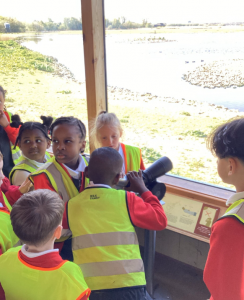
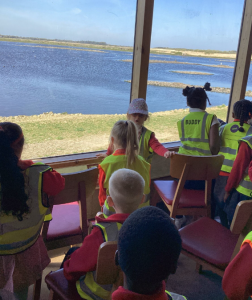
In Science, the children have been learning about animals. They thoroughly enjoyed their trip to Martin Mere, where they observed a variety of bird species. They have also learned about different animal groups, including reptiles and fish. As part of their learning, they spent time observing the school fish tank and enjoyed drawing and labelling a fish.

In Geography, the children have been learning about the countries that make up the United Kingdom. They have also been learning the capital cities of each country and comparing the similarities and differences between them.

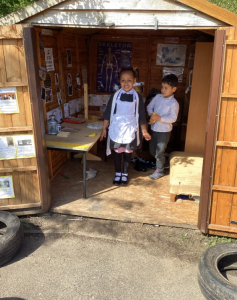
In History, the children have been learning about Florence Nightingale and why she is remembered as an important historical figure. They explored key events in her life and learned about the positive impact she had on nursing and healthcare. The children particularly enjoyed using the Florence Nightingale role-play area to bring their learning to life.

In DT, the children used their knowledge of stable structures to design and create 3D models of playgrounds that included moving parts, such as swings or roundabouts. They enjoyed discussing their own experiences of visiting parks and were delighted to welcome parents and carers into school to help create their models.
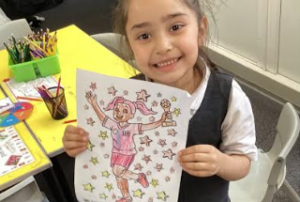
In Art, the children have been learning about William Morris and his use of repeating patterns. They explored examples of his work, including designs found on chopping boards and wrapping paper. The children will also create their own artwork inspired by William Morris’s distinctive style.

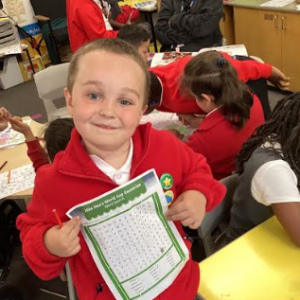
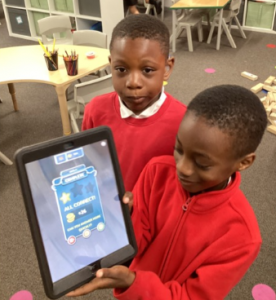
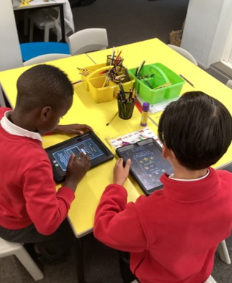
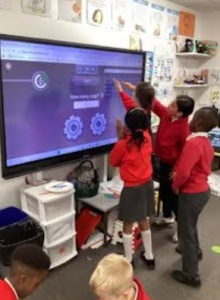
In Computing, the children have been learning how to log on to a computer and save documents. They have applied these skills by accessing their own Martin Mere profiles and logging on to the Numbots app on the iPads to practise their maths skills.

In RE, the children have been learning about belonging and the symbols and objects that represent belonging within different religions. They discussed what is important to them and why certain items or experiences are special. They have also explored the Christian values of hope and love through worship lessons.

In Music, the children have been exploring how instruments can be used to create different sounds. They have also enjoyed singing songs linked to popular children’s stories, including The Three Little Pigs. In preparation for their class assembly, they have been learning a song and rap about L.S. Lowry.

In PSHE, the children have been learning about what it means to be an ally. Through the story Elmer, they discussed the importance of celebrating differences and valuing individuality. They also enjoyed taking part in Empathy Day, reading A Child’s Garden and exploring the main character’s feelings throughout the story.


Phonic Screening Check
The phonics screening check is taken individually by all children in Year 1 in England usually in June. It is designed to give teachers and parents information on how your child is progressing in phonics. It will help to identify whether your child needs additional support at this stage so that they do not fall behind in this vital early reading skill.
The check consists of 40 words and non-words that your child will be asked to read one-on-one with a teacher. Non-words (or nonsense words, or alien words) are a collection of letters that will follow phonics rules your child has been taught, but don’t mean anything – your child will need to read these with the correct sounds to show that they understand the phonics rules behind them.
The 40 words and non-words are divided into two sections – one with simple word structures of three or four letters, and one with more complex word structures of five or six letters. The teacher administering the check with your child will give them a few practice words to read first – including some non-words – so they understand more about what they have to do. Each of the non-words is presented with a picture of a monster / alien, as if the word were their name (and so your child doesn’t think the word is a mistake because it doesn’t make sense!).
There is more information for parents on the Oxford Owl Website.
https://www.oxfordowl.co.uk/
Helpful Links
| Year/
Term |
TOPIC NAME | Science
|
History
|
Geography
|
Art and DT
RRSA Articles 13, 31
|
PSHE
|
RE
RRSA Article 14
|
Computing
|
Music
RRSA Articles, 13, 31
|
PE
RRSA Articles 13, 24, 31
|
MFL
|
| Year 1
SUMMER |
Where in the World | Living Things & Their Habitats Y1
Seasonal Change (Summer- outdoor learning) |
Florence Nightingale
RRSA Articles 1,2, 27
|
The United Kingdom.
Name and locate countries of the UK
Use atlas / maps
Capital cities / food / traditions
|
Art- Wall Art with William Morris
William Morris (PB Unit)
Study of a Summer Tree
DT – Stable Structures PB Unit may be linked to playgrounds
|
Keeping Safe – Rules, Household Substances, What to do in an emergency
RSE – Family/Friends, Diff & Sim between people
BV – Individual Liberty
BV – Mutual Respect and Tolerance |
What does it Mean to Belong to a Faith Community? | Getting to know IT- Basic Skills
Word Processing/ Creating Pictures
|
Summer 1 Story time & Our Bodies
Summer 2 Travel & Water |
Orienteering
Netball
Athletics
Fitness |
n/a |

Homework Leaflet-Homework leaflet
